ThoughtFox
The party and supporters of a Nigerian opposition leader named in a US congressional bill seeking sanctions on Nigerian groups and individuals accused of persecuting Christians Thursday strongly rejected claims portraying him as a religious extremist as “unfounded”.
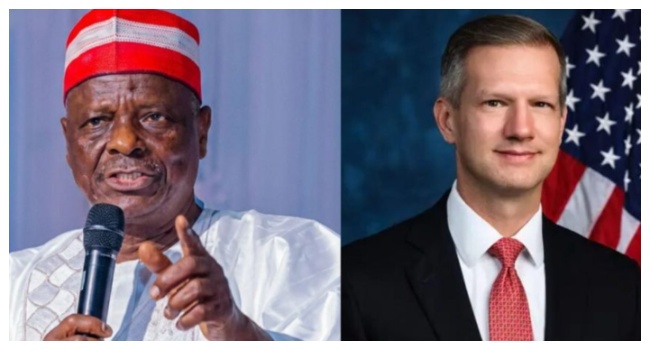
Rabiu Musa Kwankwaso, a former governor of northwestern Kano state, is the only politician individually named in the bill put forward Tuesday by Republican lawmakers.
The move comes after unsubstantiated allegations by President Donald Trump late last year that violence in Nigeria amounted to the “persecution” and “genocide” of Christians.
The Nigerian government and independent analysts reject that framing of the country’s myriad overlapping conflicts.
The bill, the Nigeria Religious Freedom and Accountability Act of 2026, sponsored by Congressmen Chris Smith, Riley Moore and three other lawmakers, asks the US Secretary of State to determine whether Fulani-ethnic militias in Nigeria qualify as a foreign terrorist organisation.
It proposes that the State Department and Treasury Department impose “asset freezes” and a “visa ban” on “Fulani-ethnic nomad militias” as well as Kwankwaso.
“We state unequivocally that these allegations are unfounded, misleading and inconsistent with the verifiable public record of Senator Kwankwaso’s life and service,” a spokesman for his Kwankwasiyya political movement said in a statement.
He has always stood “firmly against violence, extremism and terrorism”, it added.
Kwankwaso — a presidential candidate in 2023 — is currently not under any investigation in Nigeria for religious rights violations.
Widely regarded as a moderate Muslim, Kwankwaso introduced Islam’s sharia law code in Kano, northern Nigeria’s most populous state, in 2000 when he was governor.
Sharia, based on the teachings of the Koran, runs parallel to state and federal justice systems in 12 northern Nigerian states.
His New Nigeria Peoples Party (NNPP) told local media on Wednesday that the politician has no extremist links and that his naming in the bill was a “contrived action against an innocent man”.
The bill also lists the Miyetti Allah Cattle Breeders Association of Nigeria (MACBAN), a Fulani cattle dealers association, and the Miyetti Allah Kautal Hore, a Fulani cultural group.
The majority Muslim herders, mostly nomadic Fulani, have been blamed for deadly attacks on mostly Christian rural communities in parts of central and north central Nigeria.
But researchers say the violence is driven more by competition over dwindling resources than religion.
Climate change impacts and rapid population growth have worsened social tensions and fuelled violence.
Trump declared Nigeria a Country of Particular Concern in October, a State Department designation for religious freedom violations.
But Washington has also stepped up military cooperation in recent months, including collaboration on Christmas day air strikes on jihadist locations in northwest Nigeria in December.
AFP